Kanji 木 - tree, wood
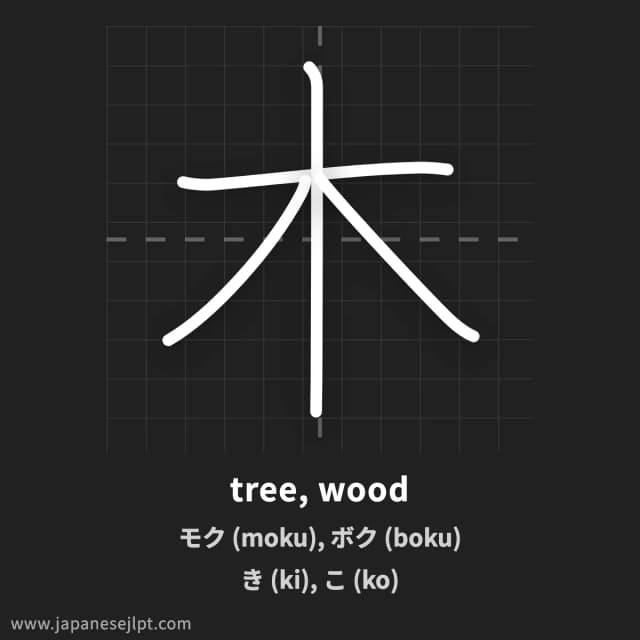
Kanji 木 means tree, wood. Onyomi readings are モク (moku), ボク (boku) . Kunyomi readings are き (ki), こ (ko).
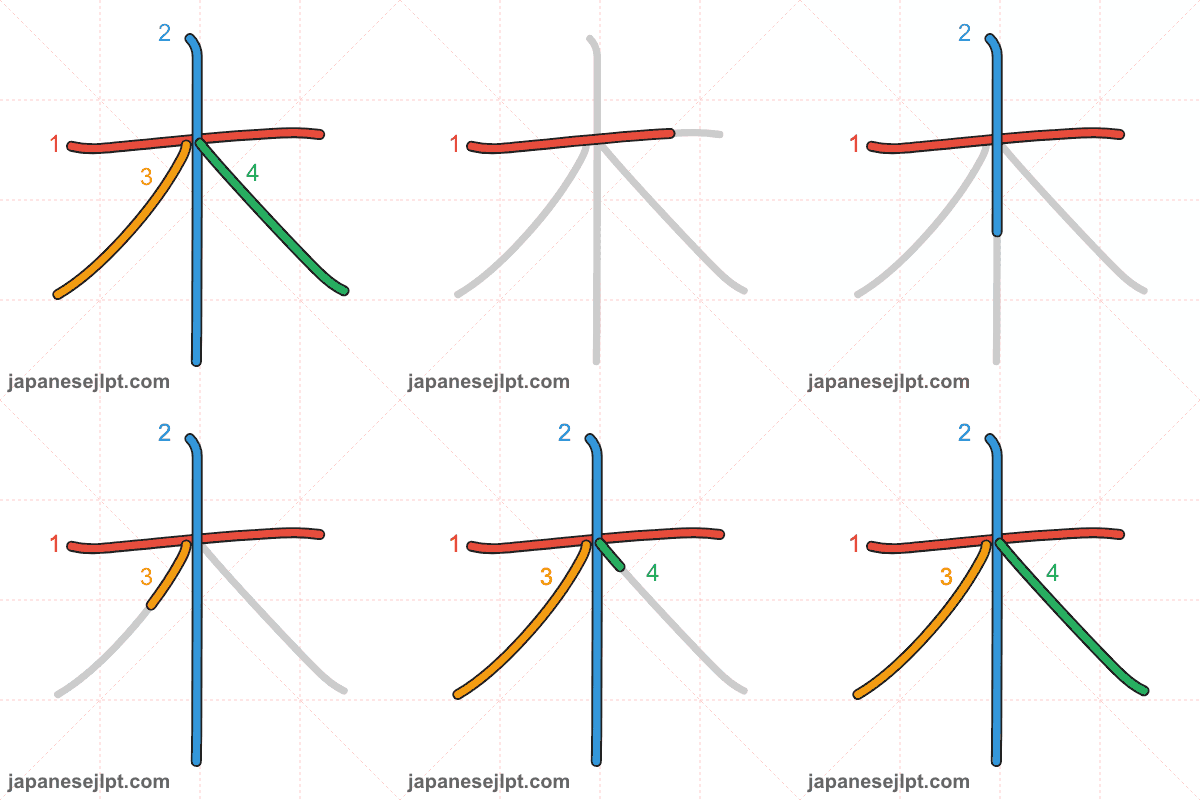
Stroke order animation (4 strokes)
Stroke Order Diagram
Each box shows the kanji up to that stroke. Red dot indicates stroke start point.
Readings of 木
音On'yomi (音読み)
訓Kun'yomi (訓読み)
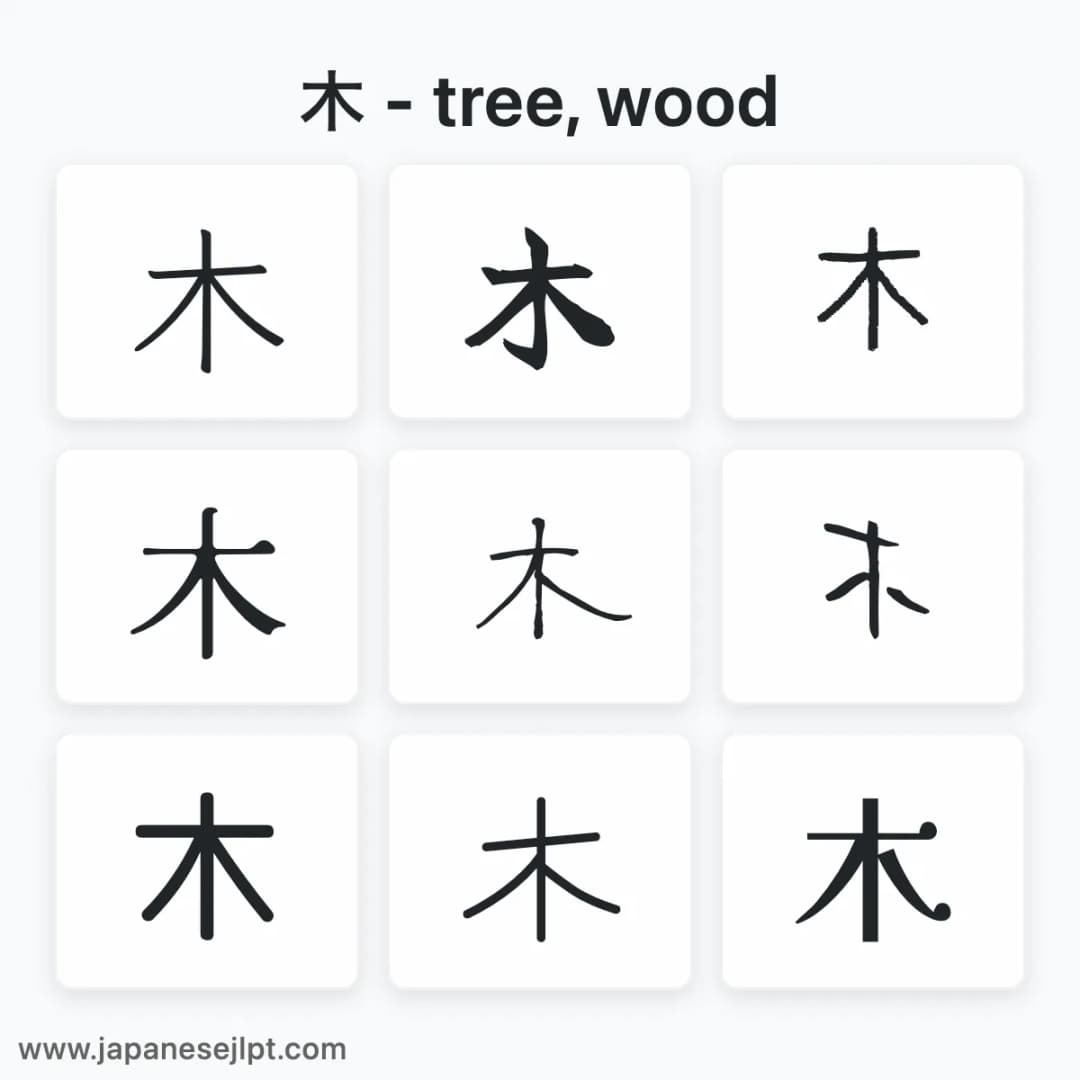
木 in different fonts
Vocabulary with 木
| Audio | English  | Romaji | Japanese | Kana |
|---|---|---|---|---|
| tree | ki | 木 | き | |
| Thursday | mokuyoubi | 木曜日 | もくようび |
More Information about 木
Common words with 木 (ki/moku/boku)
- 木 (ki)(き): tree; wood
- 木材 (mokuzai)(もくざい): lumber, timber
- 木陰 (kokage)(こかげ): shade of a tree
- 木の葉 (konoha)(このは): tree leaves
- 大木 (taiboku)(たいぼく): a big tree
- 植木 (ueki)(うえき): potted/tree plant
Days & planets: why 木曜日 (mokuyōbi) and 木星 (Mokusei)?
In old East Asian tradition, the Five Elements (五行 - gogyō) connect to days and planets. 木 (moku) = wood → 木曜日 (mokuyōbi)(もくようび) = Thursday and 木星 (Mokusei)(もくせい) = Jupiter.
Useful patterns and set phrases
- 木の + N (ki no + N) = wooden N: 木のいす (ki no isu) = a wooden chair
- 木の下 (ki no shita)(きのした) = under the tree
- 木登り (kinobori)(きのぼり) = tree climbing
Sound change in compounds
Before some sounds, モク (moku) becomes モッ (mo'): 木工 (mokkō)(もっこう) = woodworking; 木刀 (bokutō)(ぼくとう) keeps ボク (boku). Learn each compound’s reading with vocabulary.
Cultural notes: wood in Japan
Traditional buildings and shrines use wood. Japanese carpentry (木工 (mokkō)・もっこう) values joinery without nails. Many family names use 木 (ki): 木村 (Kimura)(きむら), 小林 (Kobayashi)(こばやし) (small forest), 森 (Mori)(もり).