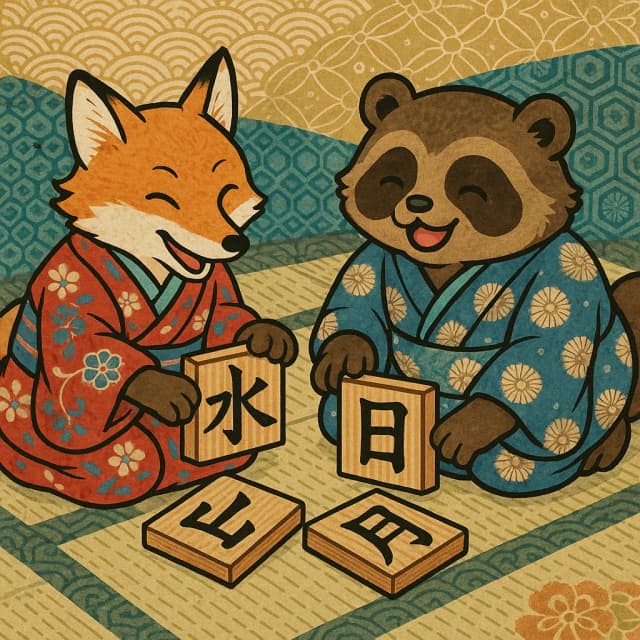
Kanji 日 - sun, day
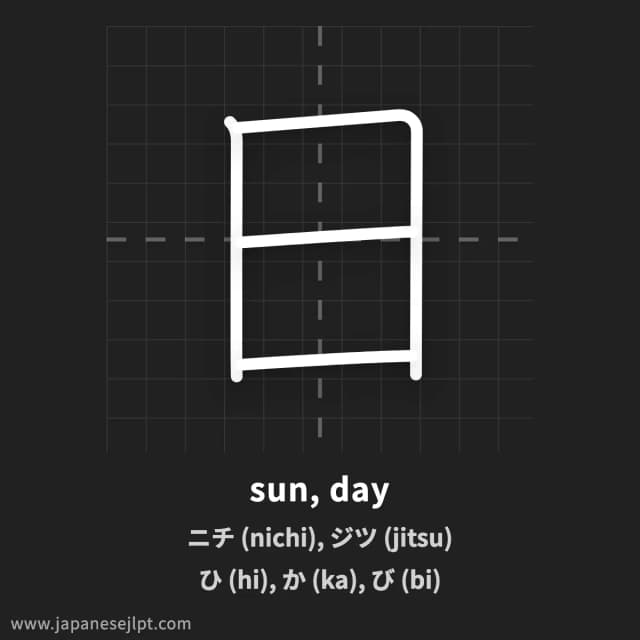
Kanji 日 means sun, day. Onyomi readings are ニチ (nichi), ジツ (jitsu) . Kunyomi readings are ひ (hi), か (ka), び (bi).
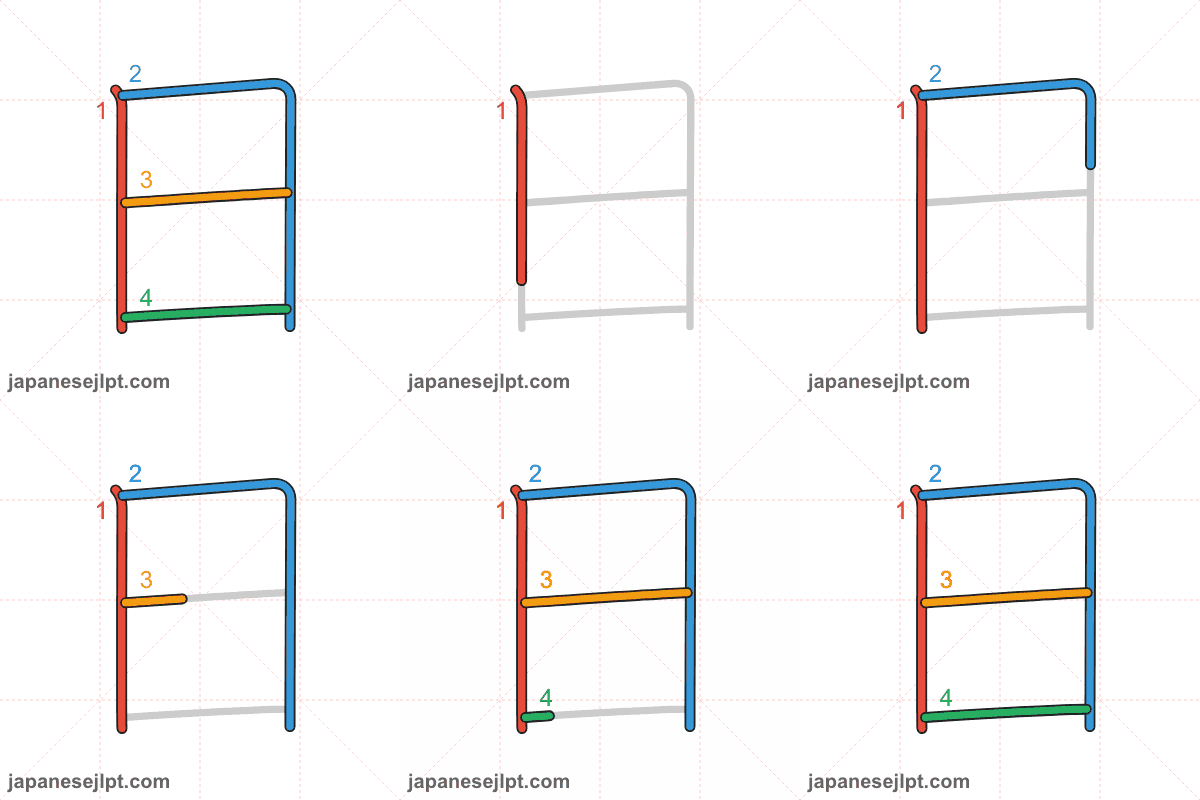
Stroke order animation (4 strokes)
Stroke Order Diagram
Each box shows the kanji up to that stroke. Red dot indicates stroke start point.
Readings of 日
音On'yomi (音読み)
訓Kun'yomi (訓読み)
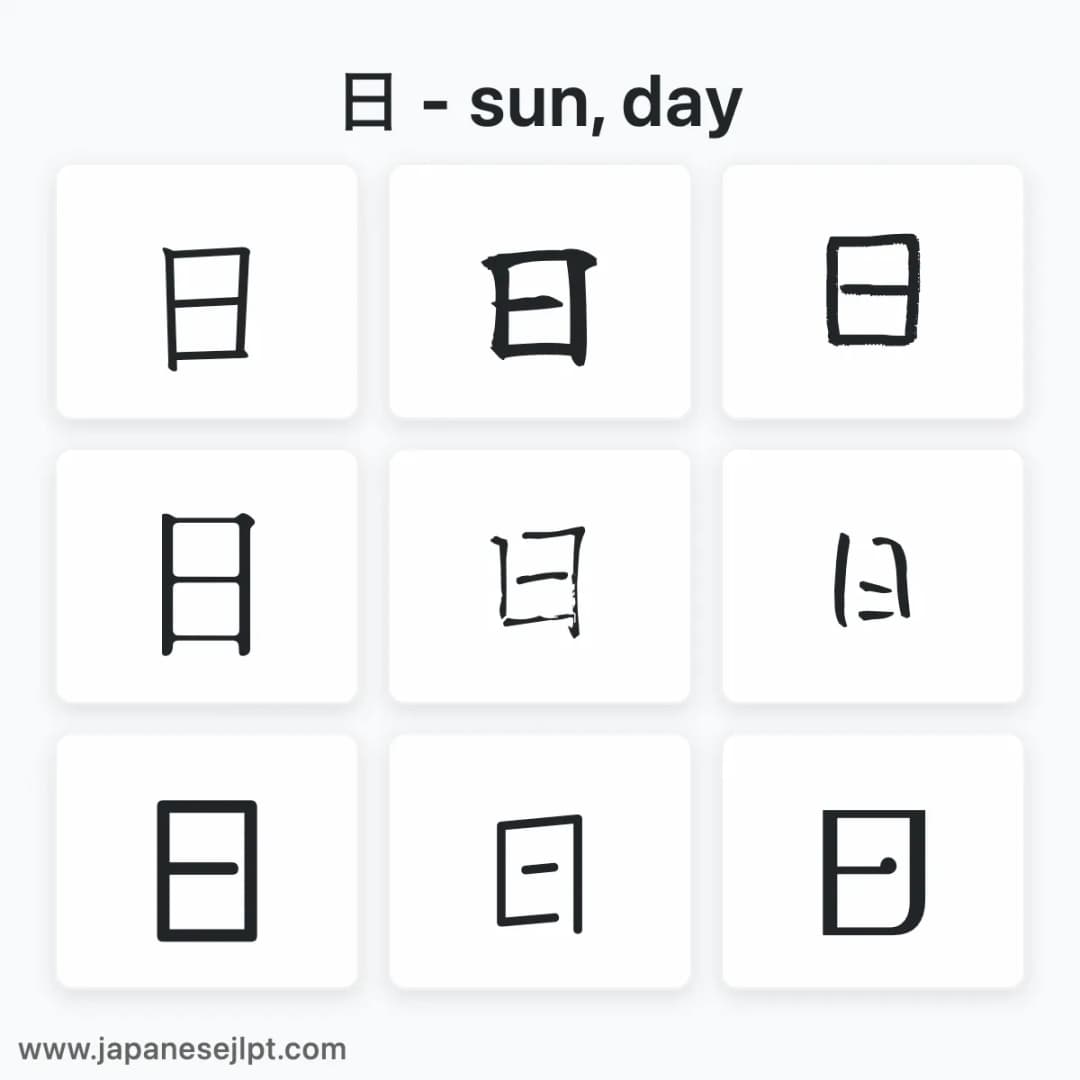
日 in different fonts
Vocabulary with 日
| Audio | English  | Romaji | Japanese | Kana |
|---|---|---|---|---|
| day | hi | 日 | ひ | |
| Japan | nihon | 日本 | にほん |
More Information about 日
Common words with 日
- 日曜日(にちようび, nichiyōbi): Sunday
- 日本(にほん/にっぽん, Nihon / Nippon): Japan (lit. “origin of the sun”)
- 毎日(まいにち, mainichi): every day
- 日記(にっき, nikki): diary
- 休日(きゅうじつ, kyūjitsu): holiday / day off
- 日光(にっこう, nikkō): sunlight (also the place name Nikkō)
Tricky readings: 一日
- いちにち(ichinichi) = one whole day (duration)
- ついたち(tsuitachi) = the 1st day of the month Context tells you which reading to use.
Time expressions with 日
- 今日(きょう, kyō): today / 今日(こんにち, konnichi): nowadays (formal)
- 明日(あした/あす, ashita / asu): tomorrow
- 昨日(きのう, kinō): yesterday
- 日中(にっちゅう, nitchū): during the day / daytime
Why does 日 appear in days and planets?
日(ひ, hi / にち, nichi) means sun. In East Asia, the seven-day cycle was linked to the sun, moon, and five visible planets. Each day uses a kanji from this system:
- 日曜日(にちようび, nichiyōbi) = Sunday (the sun’s day)
- 月曜日(げつようび, getsuyōbi) = Monday (moon)
- 火曜日(かようび, kayōbi) = Tuesday (Mars, fire 火)
- 水曜日(すいようび, suiyōbi) = Wednesday (Mercury, water 水)
- 木曜日(もくようび, mokuyōbi) = Thursday (Jupiter, wood 木)
- 金曜日(きんようび, kin’yōbi) = Friday (Venus, metal 金)
- 土曜日(どようび, doyōbi) = Saturday (Saturn, earth 土)
Japan’s country name 日本(にほん/にっぽん, Nihon/Nippon) uses 日 (sun) + 本(もと, moto / ほん, hon = origin/base), meaning “origin of the sun.” From China’s viewpoint, Japan lies to the east, where the sun rises, so it was called the Land of the Rising Sun.
Look-alikes to watch out for
- 日 (sun/day) vs 目(め, me) (eye): 目 is taller and often looks like it has more inside space/lines.
- 日 vs 曰(えつ/いわく, etsu/iwaku): 曰 has a small opening at the bottom; 日 is fully closed.
- 日 vs 白(しろ, shiro): 白 has a tiny extra stroke at the top.