Kanji 十 - ten
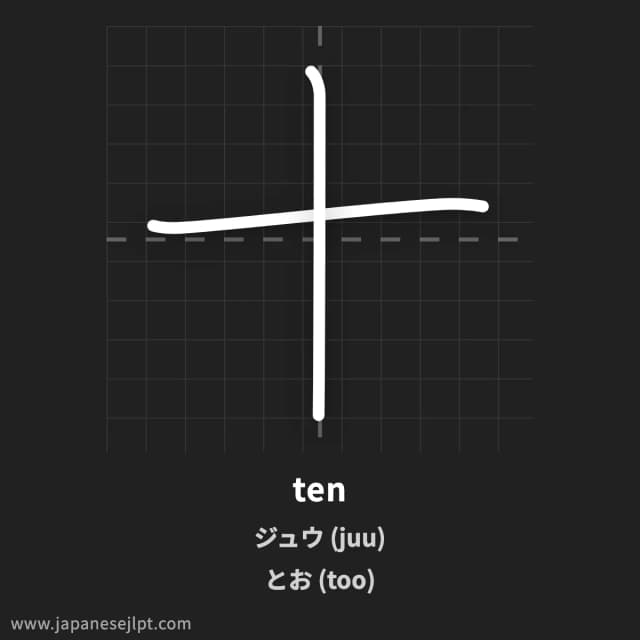
Kanji 十 means ten. Onyomi readings are ジュウ (juu) . Kunyomi readings are とお (too).
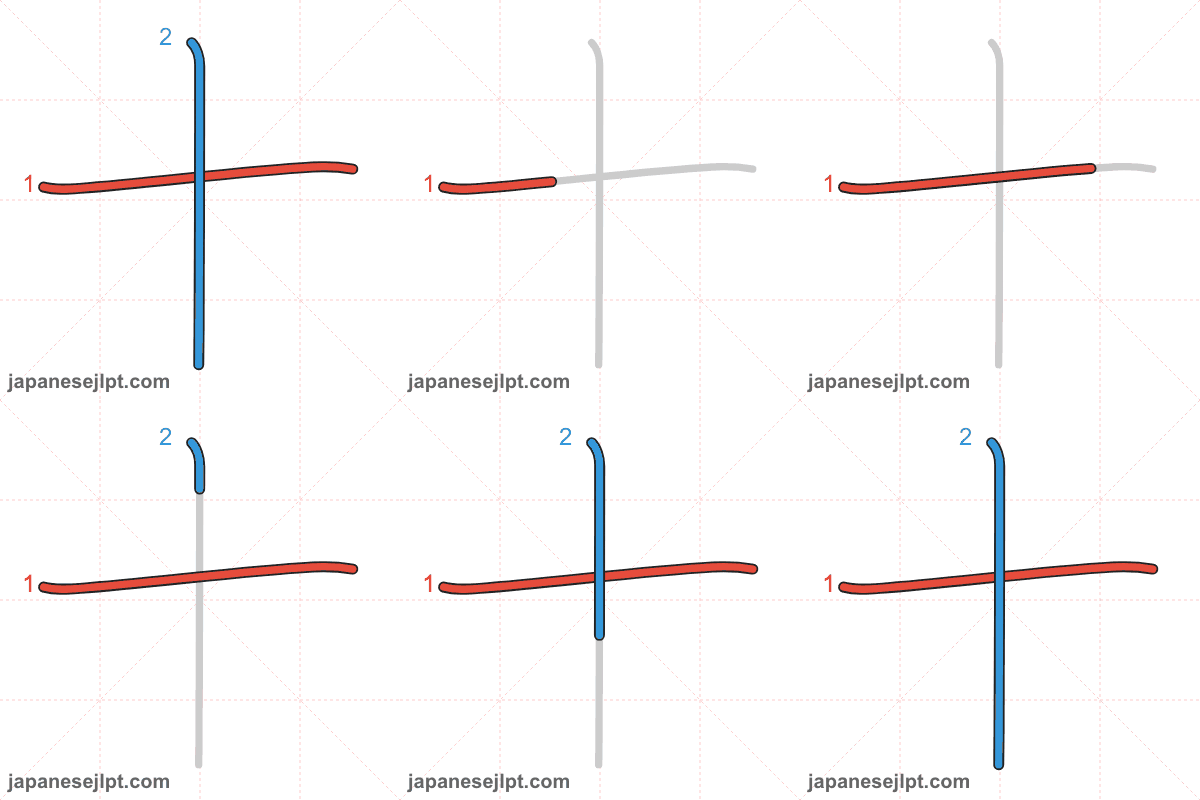
Stroke order animation (2 strokes)
Stroke Order Diagram
Each box shows the kanji up to that stroke. Red dot indicates stroke start point.
Readings of 十
音On'yomi (音読み)
訓Kun'yomi (訓読み)
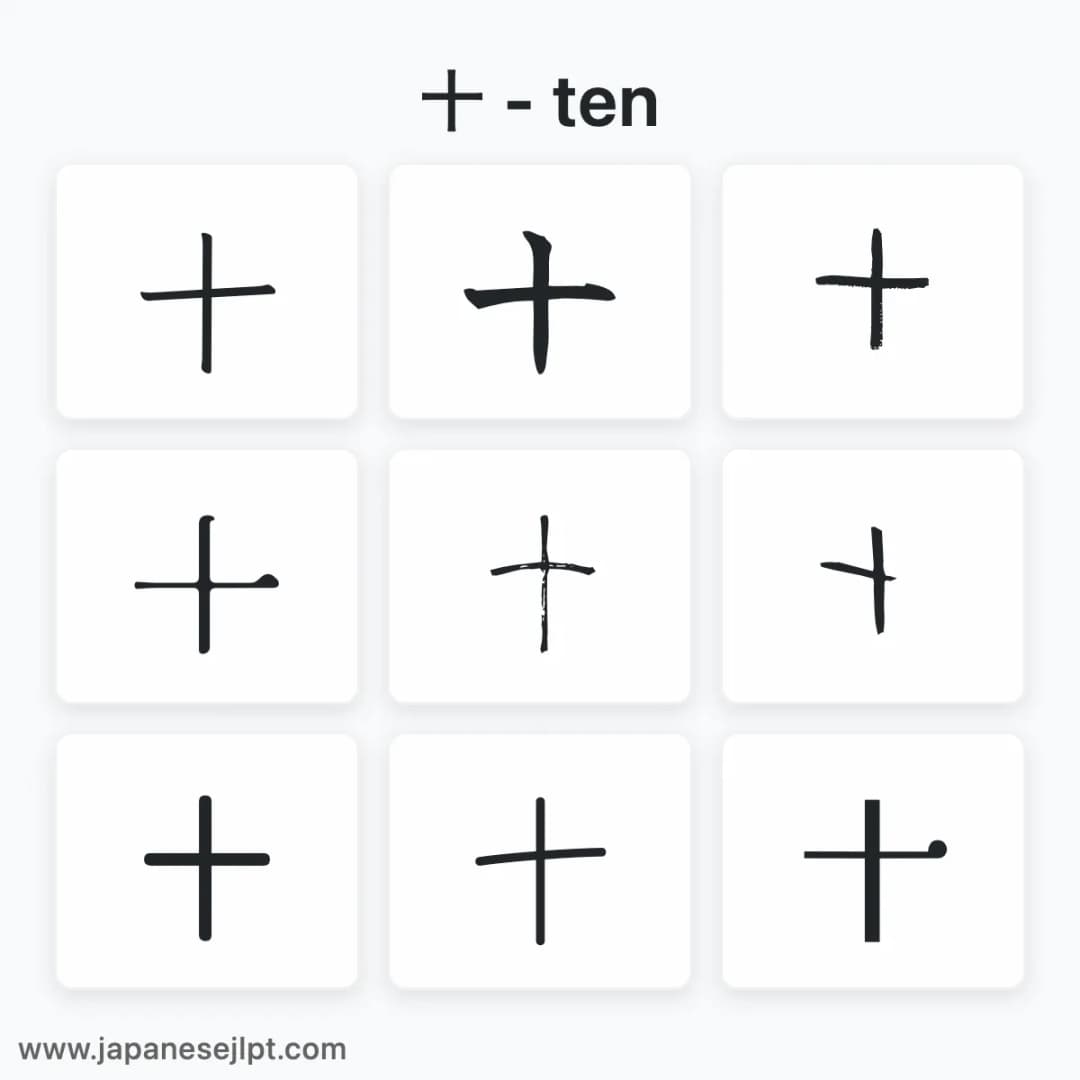
十 in different fonts
Vocabulary with 十
| Audio | English  | Romaji | Japanese | Kana |
|---|---|---|---|---|
| ten | juu | 十 | じゅう | |
| October | juugatsu | 十月 | じゅうがつ |
More Information about 十
Common words with 十 (jū)
- 十 (tō)(とお): ten (general counter)
- 十人 (jūnin)(じゅうにん): ten people
- 十月 (jūgatsu)(じゅうがつ): October
- 十日 (tōka)(とおか): the 10th day; ten days
- 十分 (jūbun)(じゅうぶん): enough, sufficient
- 十倍 (jūbai)(じゅうばい): ten times
- 十円 (jūen)(じゅうえん): 10-yen coin
- 十代 (jūdai)(じゅうだい): the teens (ages 10–19)
Why does 十分 (jūbun/juppun) have two readings?
十分 (jūbun/juppun) can be read じゅうぶん (jūbun) (meaning enough/sufficient) or じっぷん/じゅっぷん (jippun/juppun) (meaning 10 minutes). The meaning tells you the reading:
- “Are 5 cookies enough?” → じゅうぶん (jūbun)
- “I’ll be there in 10 minutes.” → じっぷん/じゅっぷん (jippun/juppun)
Cultural/official form: what is 拾 (jū)?
In formal money writing, Japan uses special number forms (大字・だいじ (daiji)) to prevent tampering. The daiji for 十 (jū) is 拾 (jū) (normally read ひろ-う (hirou), “to pick up”). In amounts it stands for ten and is harder to alter than 十 (jū). Example: 拾万円 (jū man'en) (100,000 yen).
Cultural notes and symbols with 十 (jū)
- 十字 (jūji)(じゅうじ): a cross shape; appears in words like 十字路 (jūjiro)(じゅうじろ) = crossroads.
- 十戒 (jikkai)(じっかい): the Ten Commandments (in Christianity/Judaism contexts in Japanese).
- 十干 (jikkan)(じっかん): the Ten Heavenly Stems used in the traditional calendar (combined with the 十二支 (jūnishi)).
Idioms and set phrases with 十 (jū)
- 十中八九 (jitchūhakku)(じっちゅうはっく): most likely; eight or nine out of ten
- 九分九厘 (kubu kurin)(くぶくりん) & 十中八九 (jitchūhakku): both mean almost certain (learned together)
- 十人十色 (jūnintoiro)(じゅうにんといろ): to each their own; everyone is different
Common words with 十 (jū)
- 十 (tō)(とお): ten (general counter)
- 十人 (jūnin)(じゅうにん): ten people
- 十月 (jūgatsu)(じゅうがつ): October
- 十日 (tōka)(とおか): the 10th day; ten days
- 十分 (jūbun)(じゅうぶん): enough, sufficient
- 十倍 (jūbai)(じゅうばい): ten times
- 十円 (jūen)(じゅうえん): 10-yen coin
- 十代 (jūdai)(じゅうだい): the teens (ages 10–19)
Why does 十分 (jūbun/juppun) have two readings?
十分 (jūbun/juppun) can be read じゅうぶん (jūbun) (meaning enough/sufficient) or じっぷん/じゅっぷん (jippun/juppun) (meaning 10 minutes). The meaning tells you the reading:
- “Are 5 cookies enough?” → じゅうぶん (jūbun)
- “I’ll be there in 10 minutes.” → じっぷん/じゅっぷん (jippun/juppun)
Cultural/official form: what is 拾 (jū)?
In formal money writing, Japan uses special number forms (大字・だいじ (daiji)) to prevent tampering. The daiji for 十 (jū) is 拾 (jū) (normally read ひろ-う (hirou), “to pick up”). In amounts it stands for ten and is harder to alter than 十 (jū). Example: 拾万円 (jū man'en) (100,000 yen).
Cultural notes and symbols with 十 (jū)
- 十字 (jūji)(じゅうじ): a cross shape; appears in words like 十字路 (jūjiro)(じゅうじろ) = crossroads.
- 十戒 (jikkai)(じっかい): the Ten Commandments (in Christianity/Judaism contexts in Japanese).
- 十干 (jikkan)(じっかん): the Ten Heavenly Stems used in the traditional calendar (combined with the 十二支 (jūnishi)).
Idioms and set phrases with 十 (jū)
- 十中八九 (jitchūhakku)(じっちゅうはっく): most likely; eight or nine out of ten
- 九分九厘 (kubu kurin)(くぶくりん) & 十中八九 (jitchūhakku): both mean almost certain (learned together)
- 十人十色 (jūnintoiro)(じゅうにんといろ): to each their own; everyone is different