Kanji 入 - enter
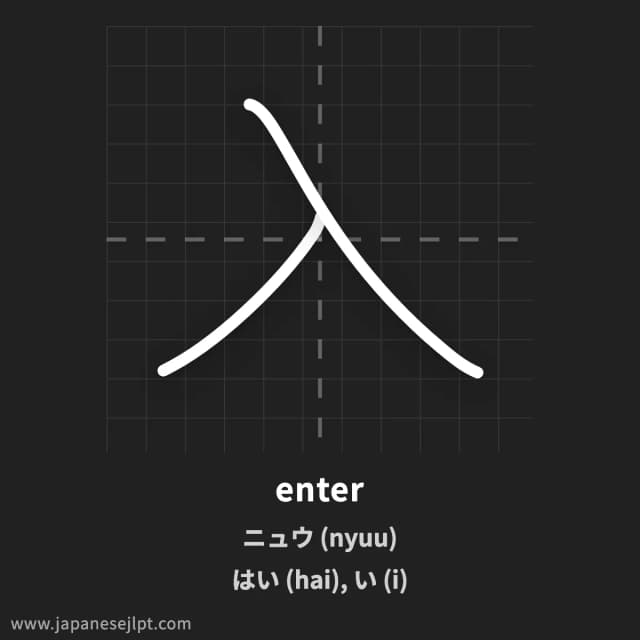
Kanji 入 means enter. Onyomi readings are ニュウ (nyuu) . Kunyomi readings are はい (hai), い (i).
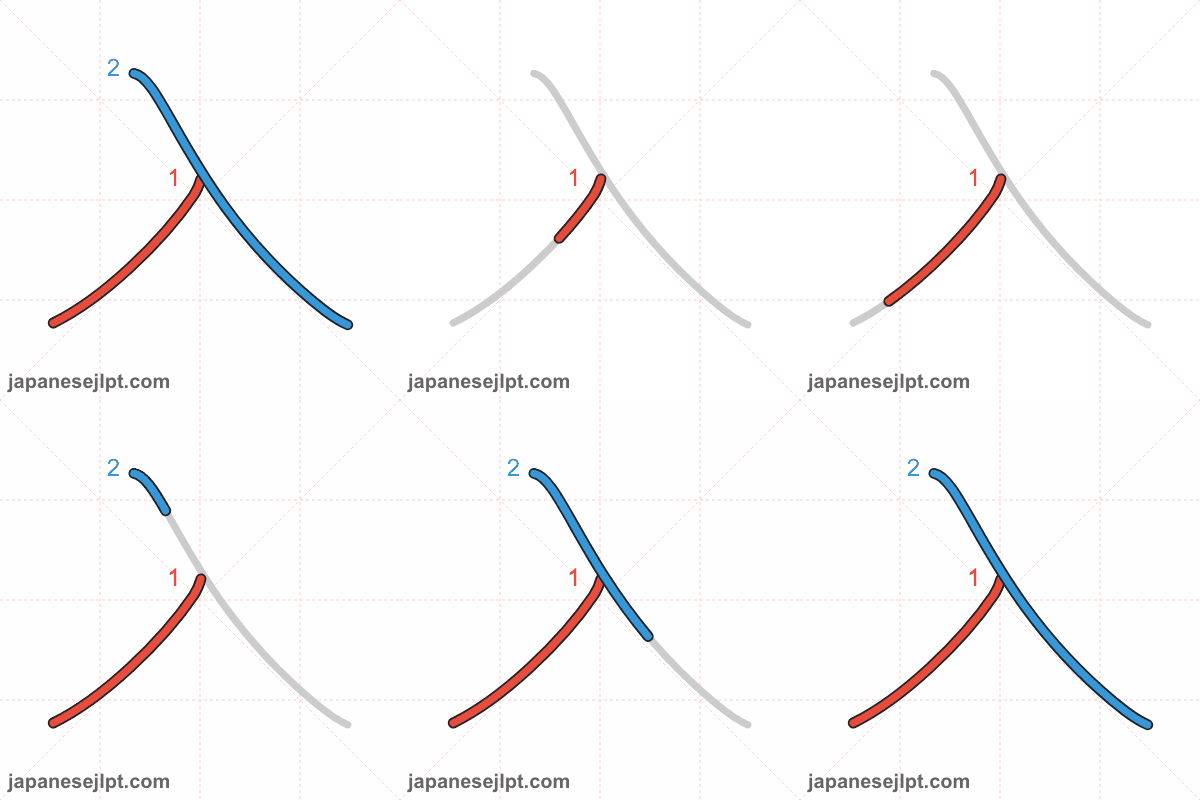
Stroke order animation (2 strokes)
Stroke Order Diagram
Each box shows the kanji up to that stroke. Red dot indicates stroke start point.
Readings of 入
音On'yomi (音読み)
訓Kun'yomi (訓読み)
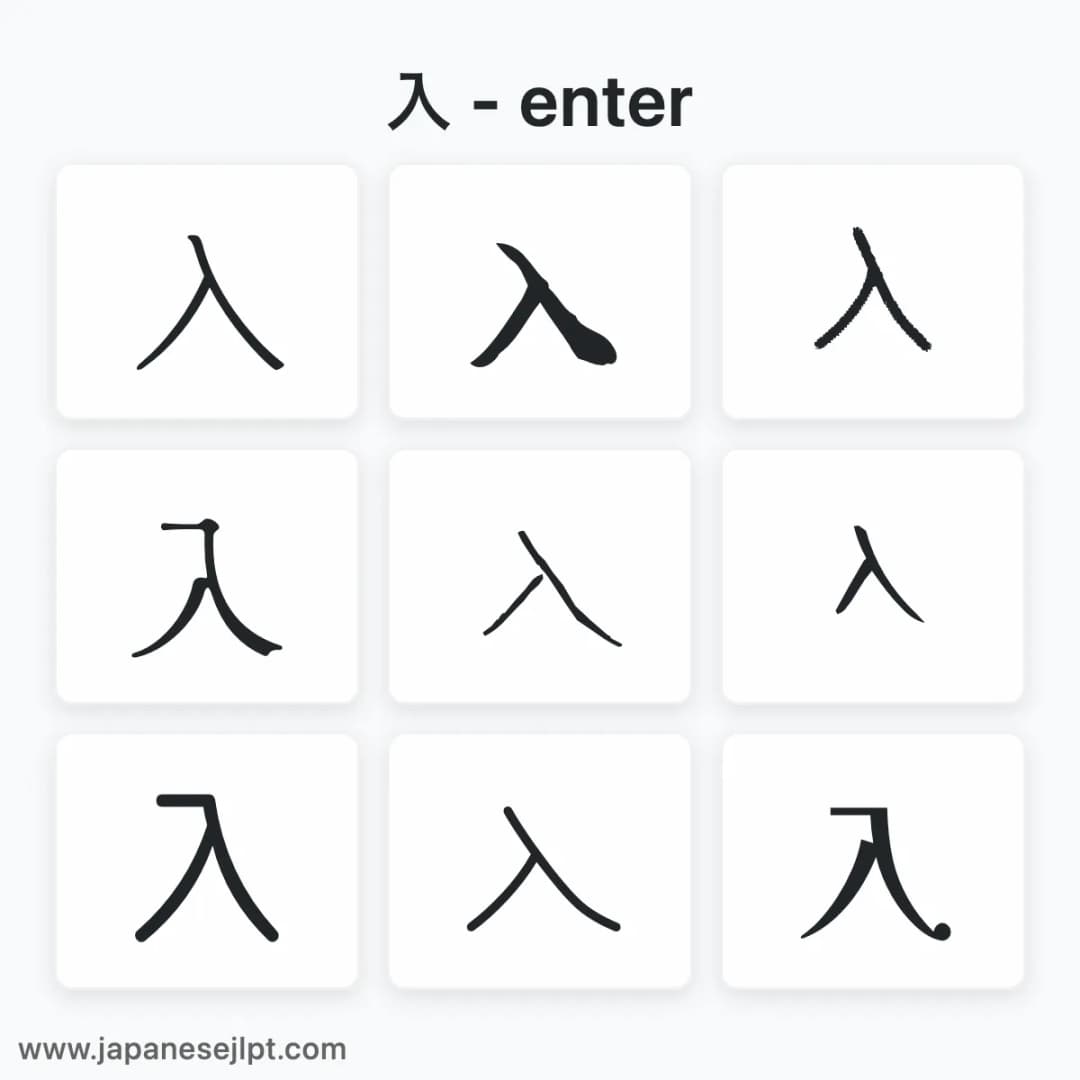
入 in different fonts
Vocabulary with 入
| Audio | English  | Romaji | Japanese | Kana |
|---|---|---|---|---|
| entrance | iriguchi | 入口 | いりぐち | |
| to enter | hairu | 入る | はいる |
More Information about 入
How is 入 (hairu/iru) different from 人 (hito) (person)?
They look similar! Key point: in 入 (hairu/iru), the second stroke starts higher and crosses the first; in 人 (hito), the strokes do not cross and the right stroke is simply longer. Think 入 = enter (cross in) vs 人 = person.
Common words with 入 (hairu/iru) (everyday use)
- 入る (hairu)(はいる): to enter
- 入れる (ireru)(いれる): to put in / insert
- 入口/入り口 (iriguchi)(いりぐち): entrance (both spellings are used)
- 出入り (deiri)(でいり): coming and going; access
- 気に入る (kiniiru)(きにいる): to like; to be pleased with
Common words with 入 (nyū) (Sino-Japanese compounds)
- 入学 (nyūgaku)(にゅうがく): entering school; school admission
- 入社 (nyūsha)(にゅうしゃ): joining a company
- 入院 (nyūin)(にゅういん): hospitalization
- 輸入 (yunyū)(ゆにゅう): import
- 収入 (shūnyū)(しゅうにゅう): income
- 入力 (nyūryoku)(にゅうりょく): input (data entry)
Grammar tip: はいる (hairu) vs いれる (ireru) (intransitive vs transitive)
はいる (hairu) = something enters/goes in by itself (no direct object):
- ドアがあくと、ねこが 部屋に入る (heya ni hairu)。= The cat comes into the room.
- 窓をあけると、風が入る (kaze ga hairu)。= When I open the window, wind comes in.
- くつをぬいで、家に入る (ie ni hairu)。= Take off shoes and enter the house.
いれる (ireru) = you put something in (takes an object):
- かばんに本を入れる (kaban ni hon o ireru)。= I put a book in my bag.
- コップに水を入れる (koppu ni mizu o ireru)。= I pour water into the cup.
- 箱にりんごを入れる (hako ni ringo o ireru)。= I put apples in the box.
Cultural note: school and company entry
April is a big entry month in Japan. 入学式 (nyūgakushiki)(にゅうがくしき) is the school entrance ceremony, and 入社式 (nyūshashiki)(にゅうしゃしき) is the new employee ceremony. The kanji 入 (nyū) marks these beginnings.
Useful set phrases with 入 (nyū/iru)
- 入門 (nyūmon)(にゅうもん): beginner’s introduction (e.g., プログラミング入門 (puroguramingu nyūmon))
- 購入 (kōnyū)(こうにゅう): purchase; buying (enter money to goods!)
- 入場無料 (nyūjō muryō)(にゅうじょうむりょう): free admission
- 加入 (kanyū)(かにゅう): joining (a plan/insurance/club)